
Water Heaters Edmonton: Repair, Replacement & Installation
You've come to the right place.
At Plumb Simple Home Comfort, we repair, replace, install and maintain water heaters throughout Edmonton and surrounding communities. But our job isn’t simply to sell you a water heater. Our job is to help you understand what’s happening, explain your options and help you choose the hot-water system that makes the most sense for your home, your family and your budget. Sometimes that means installing a new water heater. Sometimes it means repairing the one you already have. Sometimes tankless is the perfect solution. And sometimes spending thousands of extra dollars converting to tankless simply isn’t necessary. We’ve created this guide to answer the questions Edmonton homeowners ask us every day about water heaters.
Need Water Heater Service Now?
If your water heater is leaking, producing little or no hot water, making unusual noises, displaying an error code or simply isn’t working properly, Plumb Simple can help. We service and install:
- Atmospheric-vent gas water heaters
- Power-vent water heaters
- Power-direct-vent water heaters
- Electric water heaters
- Tankless water heaters
- High-efficiency water-heating systems
- Many major water-heater brands
Our approach is simple: Inspect it. Diagnose it. Explain your options. Then let you decide. You’ll receive upfront pricing before approved work begins. Call Plumb Simple Home Comfort: 780-667-0760.
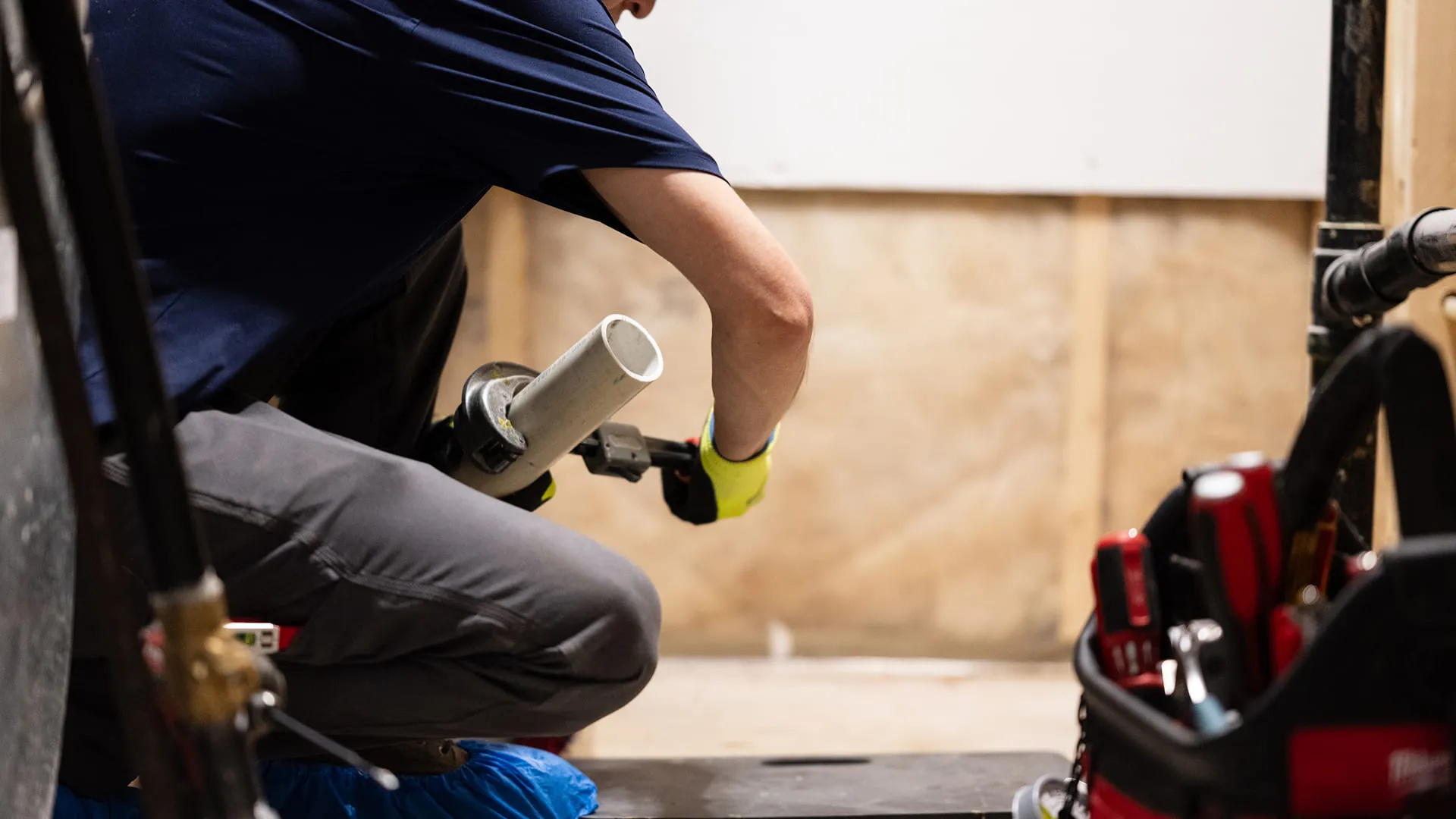

How Much Does a New Water Heater Cost in Edmonton?
Let’s answer one of the biggest questions first.
For a typical Plumb Simple water-heater replacement, Edmonton-area homeowners can generally expect to pay approximately:
| Item | Typical Plumb Simple Installed Price |
|---|---|
| 40 USG Atmospheric-Vent Gas Water Heater | $2,200–$2,500 |
| 50 USG Atmospheric-Vent Gas Water Heater | $2,400–$2,800 |
| 40 USG Power-Direct-Vent Gas Water Heater | $3,250–$3,550 |
| 50 USG Power-Direct-Vent Gas Water Heater | $3,450–$3,850 |
| 75 USG Power-Direct-Vent Gas Water Heater | $4,550–$4,950 |
| Existing Tankless Water Heater Replacement | $4,000–$4,800 |
| Tank-to-Tankless Conversion | $5,000–$7,000 |
Pricing updated October 2026. Prices shown are typical Plumb Simple ranges and are not a quote. Exact pricing is confirmed before work begins. For tank sizes or configurations not listed above, we’ll assess the application and provide pricing based on the equipment and installation required.
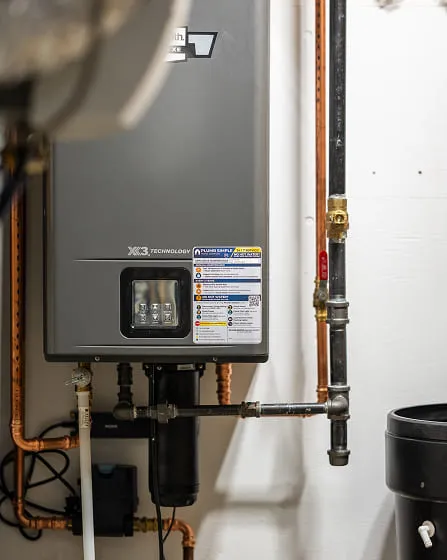
What's Included in Our Typical Water Heater Replacement Pricing?
We want homeowners comparing water-heater prices to understand what they’re actually comparing. Our typical replacement pricing includes:
- The new water heater
- Professional installation
- Dispatch
- Travel within Edmonton and surrounding cities and towns within our regular service area
- Removal of the old water heater
- Responsible recycling of the old tank
- Testing and commissioning of the new equipment
- Cleanup of the work area
That includes regular service areas such as Edmonton, Sherwood Park and other surrounding communities we serve. The goal is straightforward: We want the price you approve to represent the real job—not an artificially low advertised number that grows once we’re standing in your mechanical room.
What Can Change the Price of a Water Heater Installation?
Every mechanical room is different. The ranges above represent typical installations. Additional work may be required when the existing installation needs modification or upgrading. Price can be affected by:
- Venting modifications
- Gas-line modifications
- Water-piping changes
- Electrical requirements
- Condensate drainage
- Water-heater relocation
- Difficult access
- Required code corrections
- Changes in equipment type
- Changes in tank capacity
- Unusual installation conditions
- Additional work requested by the homeowner
If something changes the scope, we’ll explain what needs to be done and why.
Why Can Water Heater Quotes in Edmonton Be So Different?
Two quotes saying “50-gallon water heater replacement” aren’t necessarily quoting the same job. Before choosing based on price alone, ask:
- What exact water heater am I getting?
- What warranty does it carry?
- Is labour included?
- Is removal of my old tank included?
- Is disposal or recycling included?
- Are dispatch and travel included?
- Are normal installation materials included?
- Are venting modifications included?
- Who is actually performing the installation?
- Is required gas work included?
- What happens if additional work is discovered?
- Who handles warranty problems afterward?
A lower advertised price isn’t necessarily a lower final price. Compare the equipment, installation, warranty, company and complete scope.
Why Does Plumb Simple Publish Water Heater Prices?
Because homeowners want to know. We understand why many plumbing companies avoid publishing pricing. Every installation is different. But from a homeowner’s perspective, that’s not particularly helpful. If you’re researching a water-heater replacement, you probably want to know whether you’re considering something closer to $2,000, $4,000 or $7,000 before inviting somebody into your home. That’s reasonable. Our published ranges give you a realistic starting point. If your installation is unusual, we’ll assess it and provide upfront pricing before the work begins. No guessing. No surprise invoice.
Should I Repair or Replace My Water Heater?
It depends on what failed, the condition of the water heater, its age and the cost of the repair. We don’t automatically recommend replacement because a water heater has stopped working. And we don’t recommend pouring money into equipment when replacement clearly provides better value. Here’s what we consider.
1. What Actually Failed?
Some water-heater problems are repairable. Depending on the equipment, failures can involve:
- Gas controls
- Ignition components
- Thermocouples or flame-sensing components
- Heating elements
- Thermostats
- Valves
- Venting components
- Electrical components
- Tankless flow sensors
- Tankless controls
- Tankless heat-exchanger components
A failed component doesn’t automatically mean the entire water heater is finished.
2. Is the Tank Itself Leaking?
This changes the conversation considerably. Water around a water heater does not automatically mean the tank has failed. Water can originate from:
- Plumbing connections
- Drain valves
- Temperature and pressure relief valves
- Nearby piping
- Condensation
- Tankless condensate systems
- Other nearby mechanical equipment
Some of these issues may be repairable. However, if the storage tank itself has corroded through and is leaking, the tank generally needs to be replaced.
3. How Old Is the Water Heater?
Age is useful information, but it isn’t a diagnosis. Older water heaters generally carry a greater risk of corrosion and component failure, but there isn’t a magic birthday on which every water heater needs replacement. We look at:
- Age
- Condition
- Repair history
- Current failure
- Repair cost
- Location
- Consequences if the tank leaks
- Overall economics of repairing versus replacing
4. What Will the Repair Cost?
A relatively inexpensive repair on otherwise good equipment can make excellent sense. A substantial repair on an aging water heater with other deteriorating components may not. We’ll explain both options when both are reasonable.
Our Philosophy.
Repair it when repairing makes sense. Replace it when replacement makes sense. We don’t need you to buy the most expensive solution. We want you to make the right decision.
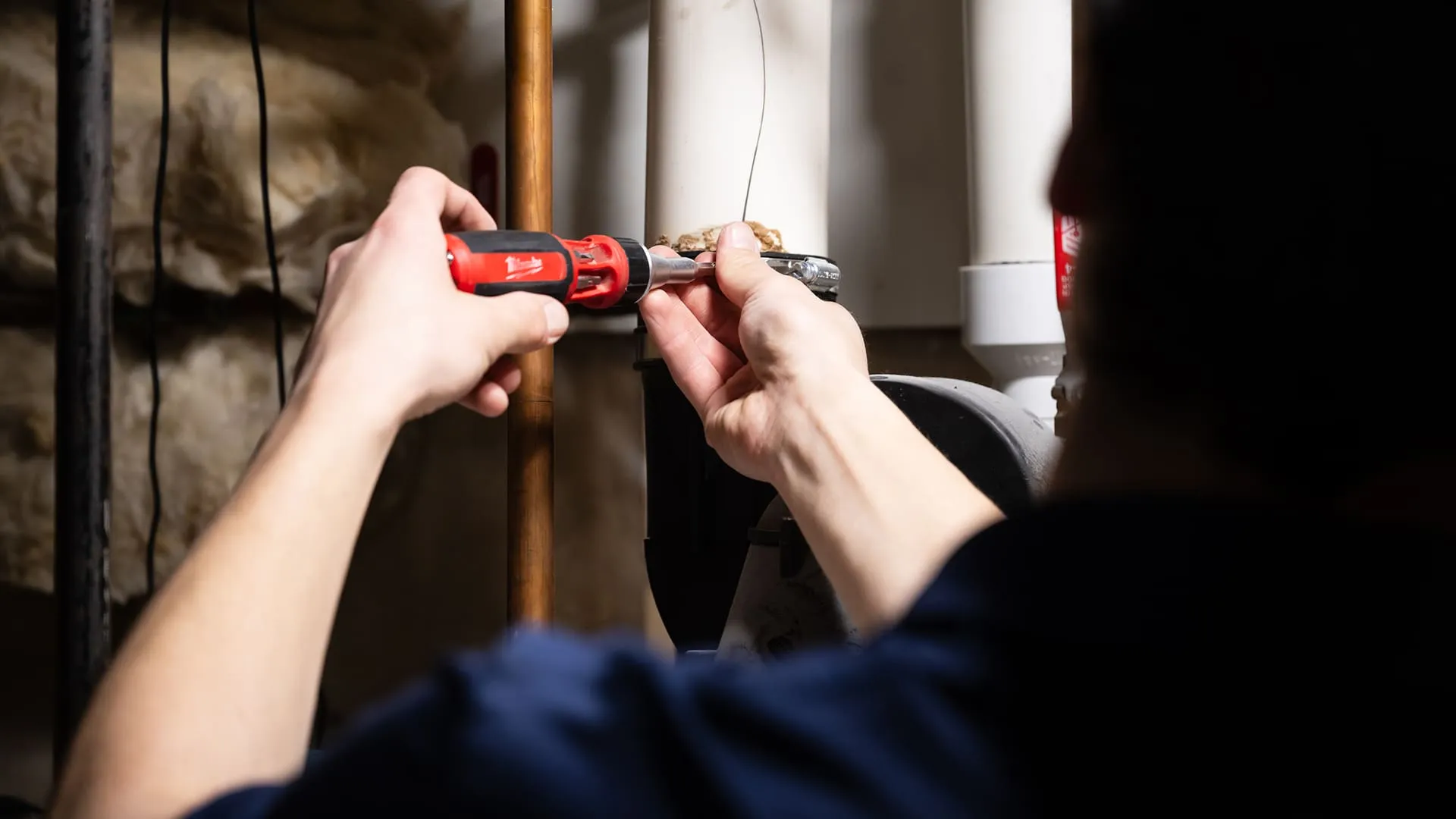
Signs Your Water Heater Needs Attention.
Common signs of a water-heater problem include:
- No hot water
- Not enough hot water
- Hot water running out faster than it used to
- Inconsistent temperature
- Slow recovery
- Water around the heater
- Corrosion around fittings
- Rust-coloured hot water
- Popping or rumbling noises
- Pilot-light problems
- Ignition failures
- Water discharging from the relief valve
- Tankless error codes
- Tankless water cycling hot and cold
- Reduced hot-water flow
- Unusual venting or combustion behaviour
Some of these indicate minor problems. Others can indicate significant equipment failure. The symptom is the beginning of the diagnosis—not the diagnosis itself.
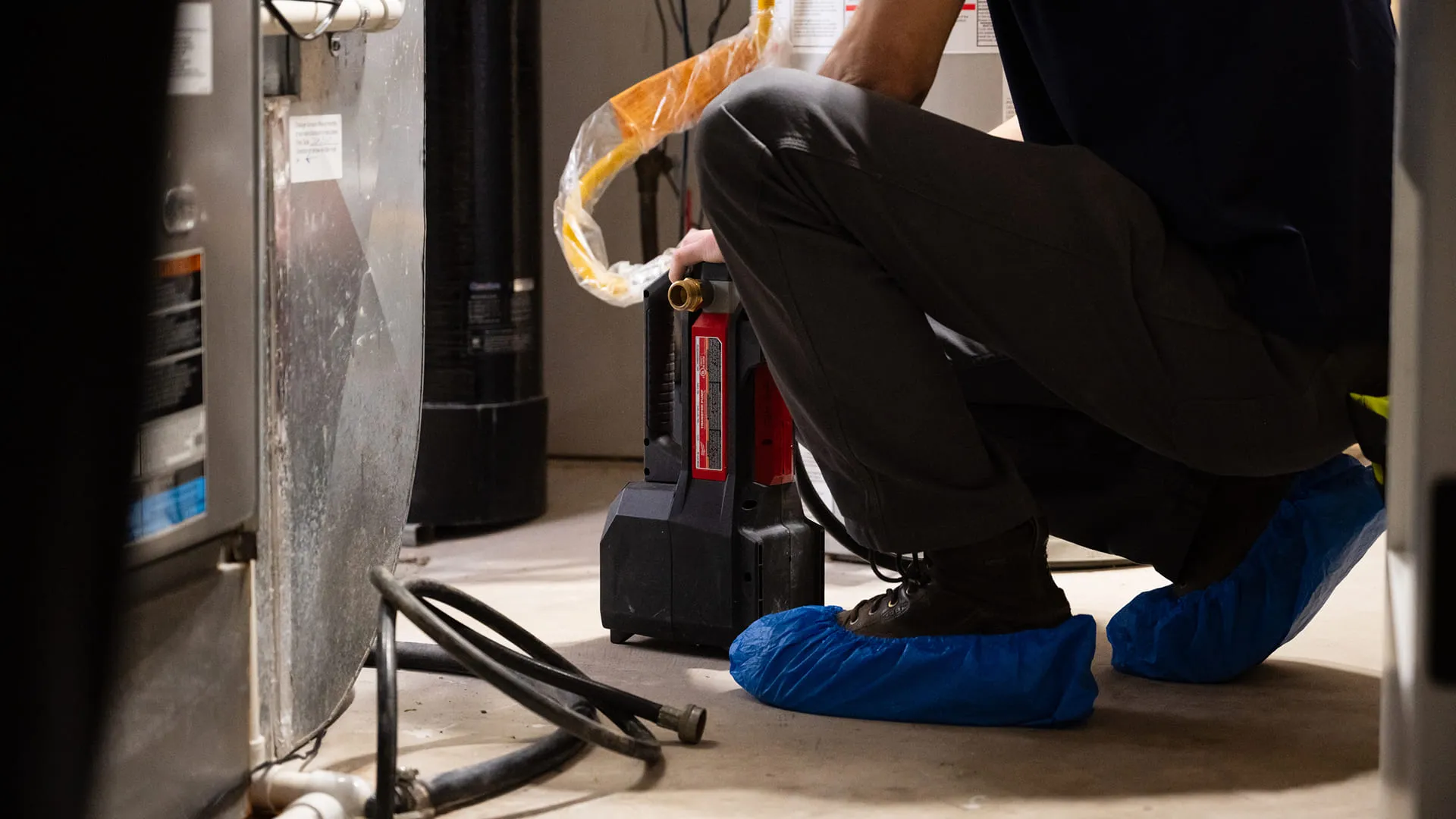
My Water Heater Is Leaking. What Should I Do?
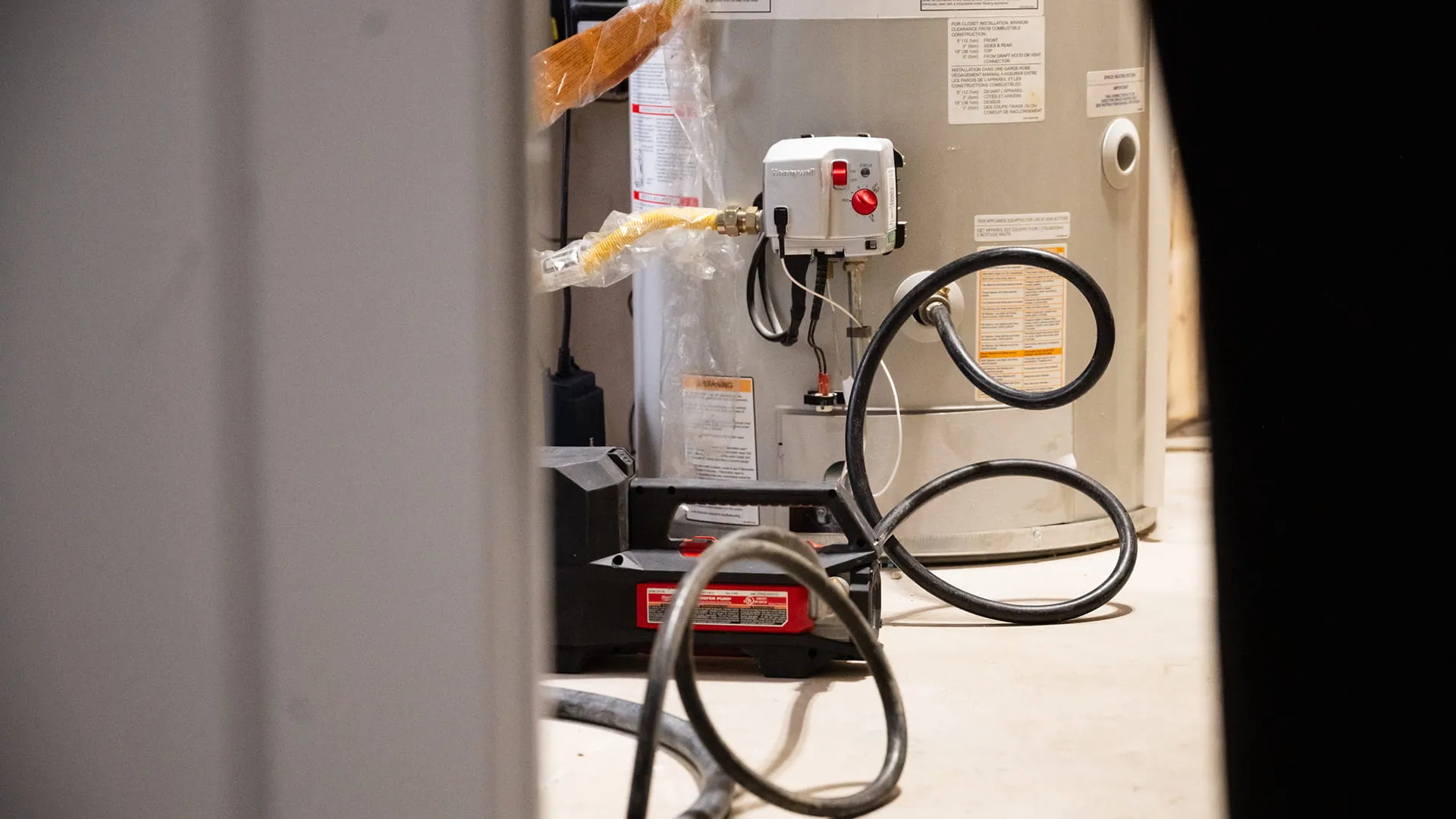
A leaking water heater should be investigated promptly. If water is actively escaping and you can safely access the water shutoff, shut off the water supply to the heater. If water is spreading toward electrical equipment, finished flooring or other parts of the home, prioritize your safety and preventing additional damage where it is safe to do so. For gas-fired equipment, don’t start disconnecting gas components yourself. Then determine where the water is coming from. A leaking connection may be repairable. A leaking valve may be repairable. Relief-valve discharge requires diagnosis. Condensation can sometimes resemble a leak. A storage tank that has corroded through generally requires replacement. If you aren’t sure where the water is coming from, Plumb Simple can inspect the system and determine the source.
What Types of Water Heaters Are Available in Edmonton?
There isn’t one water heater that’s best for every home. The right choice depends on the house, existing mechanical system, family size, hot-water demand, budget and priorities. The major options include:
- Atmospheric-vent natural-gas tanks
- Power-vent tanks
- Power-direct-vent tanks
- Electric storage tanks
- Tankless water heaters
- Other specialized/high-efficiency water-heating systems
Let’s look at the differences.
Atmospheric-Vent Gas Water Heaters
Atmospheric or natural-draft gas water heaters are common throughout Edmonton. They store heated water in a tank and rely on natural draft to carry combustion gases through an approved venting system. Advantages can include:
- Relatively simple design
- Lower upfront cost than many higher-efficiency options
- Familiar technology
- Straightforward servicing
- Good performance when properly sized
For an Edmonton home already equipped with an appropriate atmospheric water-heater installation, another properly sized atmospheric tank can still provide excellent value.
Typical Plumb Simple Pricing — 40 USG: $2,200–$2,500 installed; 50 USG: $2,400–$2,800 installed. For other tank sizes, we’ll assess current equipment options and provide pricing.
Power-Vent Water Heaters
Power-vent water heaters use a powered fan to exhaust combustion gases. This can provide different venting possibilities compared with conventional natural-draft equipment. Power-vent systems generally cost more than basic atmospheric tanks and contain additional electrical and mechanical components. That doesn’t automatically make them better or worse. They’re simply a different solution for different applications.
Power-Direct-Vent Water Heaters
Power-direct-vent water heaters use a powered venting system and are designed to draw combustion air from outdoors. This sealed-combustion approach can be particularly useful where the home’s construction, mechanical-room conditions or venting arrangement make it appropriate.
The right tank should be chosen based on the actual home—not simply because one type sounds more advanced.
Electric Water Heaters
Electric resistance water heaters use electrical heating elements rather than a gas burner. Advantages include:
- No combustion venting
- Relatively straightforward equipment
- No natural-gas connection at the appliance
- Useful in certain applications where gas isn’t available or practical
However, appliance efficiency and operating cost aren’t the same thing. Electricity price, household demand, available electrical capacity and alternative energy sources should all be considered.
Tankless Water Heaters
Tankless water heaters heat water as it flows through the appliance rather than maintaining a large tank of stored hot water. They can offer:
- Continuous hot water within the unit’s capacity
- Reduced standby energy losses
- High-efficiency options
- Compact wall-mounted installation
- No large storage tank
- Excellent performance for long-duration hot-water use
But tankless is not automatically better than a tank. It needs to be properly selected, sized, installed and maintained.
How Much Does a Tankless Water Heater Cost in Edmonton?
There are two very different tankless installations:
- Replacing an existing tankless water heater — Typical Plumb Simple price: $4,000–$4,800.
- Converting a conventional tank to tankless — Typical Plumb Simple price: $5,000–$7,000.
Why the difference? Because replacing an existing tankless system may allow us to reuse some of the infrastructure already installed. Converting from a tank can require substantial changes.
Why Does Converting From a Tank to Tankless Cost More?
Two of the biggest variables are: 1. Venting. 2. Gas supply.
New Venting: Tankless water heaters have specific venting requirements. When converting from a conventional tank, the existing venting often can’t simply be reused. The new tankless appliance may require an entirely new venting route and suitable exterior termination. Venting length, location and complexity can affect the installation cost.
Does a Tankless Water Heater Need a Bigger Gas Line?
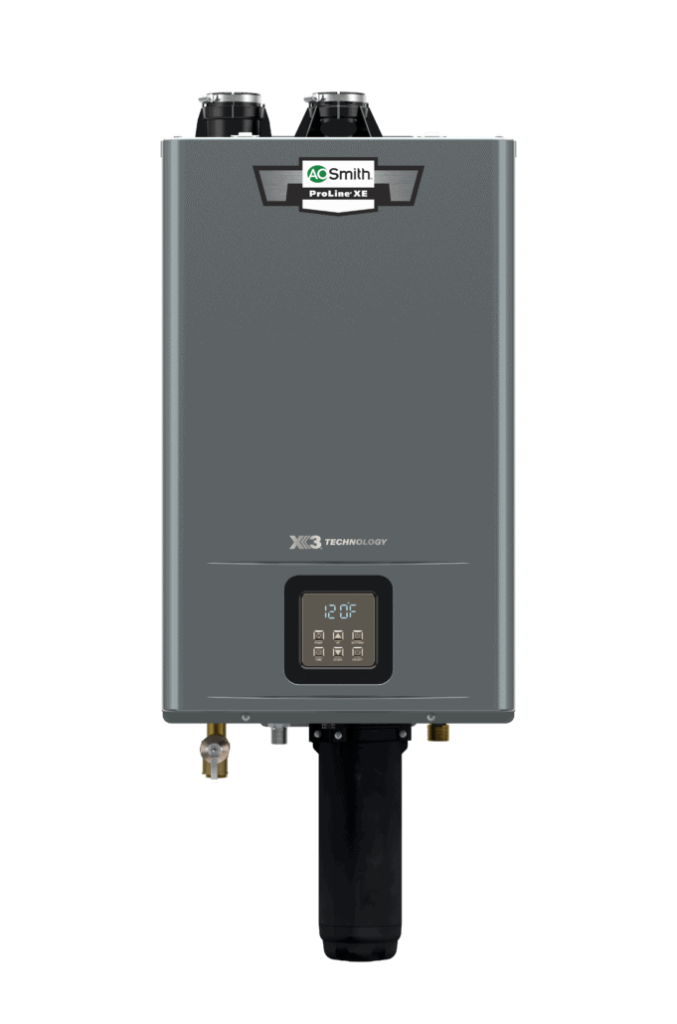
Sometimes—but not always. This is an important distinction. Tankless water heaters can have significantly higher instantaneous gas input than conventional storage water heaters. That means the existing gas system must be evaluated.
If the existing piping doesn’t have sufficient capacity, a new appropriately sized gas line may be required. In some homes, that can mean running a new gas line from the gas meter to the tankless water heater. That additional work is one of the reasons a tank-to-tankless conversion can range from approximately $5,000 to $7,000.
Be cautious of anyone who says every tankless installation automatically needs a new gas line. But be equally cautious of anyone who assumes your existing line is adequate without evaluating it.
- Tankless appliance input
- Existing gas-pipe size
- Developed pipe length
- Other connected gas appliances
- Total connected gas load
- Available supply
Other Factors Affecting Tankless Conversion Cost
These can include:
That’s why we can provide a useful typical range but need to assess the home before providing an exact tankless-conversion price.
- Distance from the heater to an exterior wall
- Venting route
- Vent termination location
- Gas-meter location
- Existing gas capacity
- Length of new gas piping
- Water-piping modifications
- Electrical requirements
- Condensate drainage
- Equipment selected
- Accessibility
- Required code upgrades
Neither. At least not universally. The better system is the one that fits your home and your priorities.
A conventional tank may make more sense if:
- Lower upfront cost matters
- Your current tank comfortably supplies your family
- Your existing system can be replaced relatively simply
- You prefer simpler equipment
- You don’t routinely run out of hot water
- A tankless conversion would require extensive gas or venting modifications
- Energy savings don’t justify the additional initial investment for you
Tankless may make more sense if:
- Your family regularly runs out of stored hot water
- Long-duration showers are important
- You have significant hot-water demand
- Energy efficiency is important
- Mechanical-room space matters
- You plan to stay in the home long enough to justify the investment
- Your home is well suited to the installation
- You understand the maintenance requirements
We install both. That’s important because it means our recommendation doesn’t have to begin with: “Tankless is always better.” It isn’t.
For some homeowners, absolutely. For others, probably not. Consider the difference.
A typical Plumb Simple 50 USG atmospheric water-heater replacement is approximately: $2,400–$2,800.
A typical tank-to-tankless conversion is approximately: $5,000–$7,000. That’s a meaningful additional investment.
Tankless can provide benefits such as:
- Continuous hot water within capacity
- High efficiency
- Reduced standby losses
- Smaller footprint
- Long-duration hot-water capability
But if your current tank comfortably meets your needs and minimizing upfront cost is your priority, another conventional tank may provide better value. We’d rather explain that honestly than manufacture a reason for you to spend more money.
This phrase needs clarification. A properly sized tankless water heater can continue producing hot water without depleting a storage tank. That means somebody can potentially take a very long shower without suddenly exhausting 40 or 50 gallons of stored hot water.
However: Tankless does not mean unlimited capacity. Every tankless water heater has a maximum heating output. If several fixtures demand more hot water simultaneously than the appliance can heat at the required temperature rise, you’ve exceeded its capacity.
The better description is: Tankless provides continuous hot water within the appliance’s designed capacity.
Tankless performance depends heavily on temperature rise. Temperature rise is the difference between incoming cold-water temperature and the desired outgoing hot-water temperature. The colder the incoming water, the more energy the appliance needs to heat each litre of water. That’s particularly relevant in a cold climate.
A tankless unit advertised at a certain flow rate doesn’t necessarily produce that same flow under every incoming-water condition. That’s why proper tankless sizing considers:
- Incoming water temperature
- Desired hot-water temperature
- Expected simultaneous flow
- Household usage
- Appliance heating capacity
We don’t size tankless equipment from a marketing number alone.
A properly sized unit often can. But the real answer depends on:
- Flow rate of each shower
- Other fixtures operating simultaneously
- Incoming-water temperature
- Desired outlet temperature
- Capacity of the tankless unit
Two low-flow showers create very different demand from two high-flow luxury showers plus a dishwasher and kitchen faucet. That’s why household demand matters.
Water heaters should be sized based primarily on hot-water demand, not simply house size. A 4,000-square-foot home occupied by two people may require less hot-water capacity than a 1,600-square-foot home occupied by six.
We consider:
- Number of occupants
- Number of bathrooms
- Shower usage
- Shower flow rates
- Large tubs
- Simultaneous showers
- Laundry
- Dishwasher use
- Morning routines
- Evening routines
- Current problems with hot-water capacity
- Future household needs
This is one of the most common sizing decisions. A 40 USG tank may provide perfectly adequate hot water for a household with moderate demand. A 50 USG tank provides additional stored capacity and may better suit homes where several people use hot water close together.
But capacity alone isn’t everything. Recovery performance matters too. A household taking four short showers spread across three hours is very different from one where four people all shower between 6:30 and 7:15 every morning.
We size based on how the household actually uses hot water.
Large-capacity water heaters can make sense for homes with significant peak hot-water demand. Examples may include:
- Large families
- Multiple bathrooms
- Large tubs
- High-flow showers
- Several simultaneous users
But bigger isn’t automatically better. Larger equipment generally costs more and requires more space. The goal isn’t to install the biggest water heater possible. The goal is to install the right water heater.
Storage-tank performance isn’t determined solely by tank capacity. The first-hour rating helps describe how much hot water the system can supply during a period of significant demand, accounting for stored hot water and the heater’s ability to recover.
That’s why two water heaters with similar tank capacities can perform differently in real-world use.
Tank capacity is important. Recovery is important. Actual household demand is important. All three need consideration.
There isn’t one guaranteed lifespan. Some water heaters fail relatively early. Others remain operational for considerably longer. Service life can be influenced by:
- Water chemistry
- Installation quality
- Usage
- Operating temperature
- Maintenance
- Equipment design
- Anode condition
- Sediment and scale
- Component quality
That’s why we don’t recommend replacing a water heater simply because it reached an arbitrary age. Age is a risk factor, not a diagnosis. An older tank located beside a floor drain in an unfinished mechanical room may present a different risk than the same tank located where a failure could cause major finished-space damage.
We consider the entire situation.
Sometimes proactive replacement makes sense. If a water heater is aging, showing signs of deterioration and located somewhere that a leak could cause substantial damage, replacing it before complete failure can reduce risk.
But we don’t believe every older water heater needs immediate replacement. Consider:
- Age
- Physical condition
- Corrosion
- Repair history
- Installation location
- Consequences of failure
- Household tolerance for losing hot water unexpectedly
Preventative replacement is a risk-management decision.
Edmonton Water Quality and Your Water Heater
Water quality affects water-heating equipment. Edmonton’s drinking water comes from the North Saskatchewan River. EPCOR reports average Edmonton water hardness at approximately 165 mg/L expressed as calcium carbonate, placing Edmonton water in the moderately hard range. Hardness is primarily associated with dissolved minerals such as calcium and magnesium.
When water is heated, mineral scale can form on heating surfaces and components. Over time, scale can affect:
- Tank bottoms
- Heating surfaces
- Electric elements
- Tankless heat exchangers
- Fixtures
- Equipment performance
The actual impact depends on equipment, temperature, usage and water conditions.
Yes, Edmonton’s municipal water is generally considered moderately hard. That doesn’t mean every home automatically needs a water softener. But hardness becomes relevant when discussing:
- Scale
- Tankless maintenance
- Fixture buildup
- Water-heating equipment
- Household water preferences
Be cautious of exaggerated claims that Edmonton has exceptionally terrible water. Our approach is to understand the actual water conditions and recommend treatment when it provides a real benefit.
Not necessarily. A tankless water heater can operate without a water softener. However, hardness contributes to mineral scale, and tankless heat exchangers can be affected by scale accumulation. Whether a softener makes sense depends on:
- Water hardness
- Equipment
- Usage
- Maintenance
- Household preferences
- Other water-quality concerns
A water softener shouldn’t be automatically added to every tankless quote just because it increases the sale. We’d rather explain the benefits and let you decide.
It depends on the equipment and its condition. Flushing can help remove loose sediment from certain storage water heaters. Tankless equipment may require periodic flushing or descaling according to manufacturer recommendations and local water conditions.
However, internet advice suggesting every water heater should be treated identically isn’t particularly useful. A relatively new, regularly maintained heater is different from an older tank that hasn’t been touched in many years.
Follow the manufacturer’s requirements for your equipment and have the system assessed if you’re unsure.
Many storage water heaters contain a sacrificial anode. Its job is essentially to sacrifice itself to help protect the steel tank from corrosion. Over time, the anode can become depleted. Depending on the water heater, water conditions and manufacturer requirements, inspecting and replacing the anode when appropriate may help protect the tank.
Not every water heater uses the same system. Maintenance should be appropriate for the actual equipment installed.
One possible cause is sediment or mineral accumulation at the bottom of a storage tank. Heating water around deposits can create popping, crackling or rumbling sounds. But that’s not the only possible cause. Water-heater noises can also relate to:
- Thermal expansion
- Water movement
- Burner operation
- Venting
- Valves
- Plumbing piping
A sudden change in sound is worth investigating.
Possible causes include:
- Water heater too small for current demand
- Household usage has increased
- Failed heating element
- Burner or ignition issue
- Control problem
- Reduced recovery
- Plumbing crossover
- Mixing problem
- Scale or sediment
- Changed fixture flow rates
- Deteriorating equipment
Don’t automatically buy a bigger water heater. First determine why the current system isn’t keeping up. Sometimes the equipment is undersized. Sometimes it’s simply broken.
This isn’t always a water-heater problem. If the water eventually becomes properly hot but takes a long time to reach a distant fixture, the issue may relate to the amount of cooled water sitting in the piping between the heater and fixture. Large homes and long plumbing runs can make this particularly noticeable.
Potential solutions depend on the plumbing layout and may include hot-water recirculation.
If the water itself isn’t reaching the proper temperature, that’s a different problem and requires diagnosis.
The pattern provides useful clues. If only the hot water is discoloured, the water heater or hot-water piping becomes a possible source. Potential causes can include:
- Corrosion
- Sediment
- Deteriorating components
- Plumbing materials
If both hot and cold water are discoloured, the source may be elsewhere in the water system.
Don’t replace a water heater solely because the water looks rusty without determining where the discoloration originates.
Sulphur-like or rotten-egg odours can sometimes involve interactions between:
- Water chemistry
- Bacteria
- Anode materials
- Water-heater conditions
The appropriate solution depends on the cause. Changing components without understanding why the odour is occurring may not solve the problem.
The temperature and pressure relief valve—commonly called the T&P or TPR valve—is an important safety device. Water coming from it shouldn’t simply be ignored. And the discharge should never be permanently capped or plugged. Potential causes can involve:
- Thermal expansion
- Excessive system pressure
- Excessive temperature
- Valve condition
- Other system conditions
The underlying cause needs to be diagnosed.
There isn’t a single number we recommend blindly for every household. Water temperature involves balancing:
- Scald protection
- Bacterial-growth concerns
- Energy consumption
- Household needs
- Equipment design
- Plumbing configuration
- Applicable requirements
Homes with young children, elderly occupants or other vulnerable people require particular consideration regarding scald protection.
Water-heating and distribution temperatures should be configured appropriately for the system rather than changed casually.
Depending on the appliance, potential causes can involve:
- Pilot assembly
- Gas controls
- Thermocouple or flame-sensing components
- Combustion conditions
- Venting
- Safety controls
Repeatedly relighting an appliance without understanding why it is shutting down isn’t a substitute for diagnosis. Gas-fired equipment should be properly inspected.
Tankless temperature fluctuations can have several causes. Potential issues include:
- Flow rate
- Minimum activation flow
- Scale
- Plumbing crossover
- Controls
- Capacity
- Sensors
- Installation conditions
- Other equipment problems
Error history and installation conditions can provide useful diagnostic information.
Tankless Water Heater Error Codes
Modern tankless water heaters monitor many operating conditions and may display an error code when something isn’t right. The code is useful—but it isn’t always the complete diagnosis. An error can point toward areas involving:
- Ignition
- Flame detection
- Venting
- Air supply
- Water flow
- Temperature
- Sensors
- Gas supply
- Exhaust conditions
Simply replacing the component mentioned in an error-code description can result in unnecessary repairs if the underlying cause is somewhere else. We diagnose the system, not just the number on the screen.
Water Heater Venting Matters
Gas-fired water heaters produce combustion gases. Those gases need to leave the home safely. Different water heaters can use very different venting systems, including:
- Natural-draft venting
- Powered venting
- Direct/sealed-combustion systems
- Approved vent systems for applicable high-efficiency equipment
Changing water-heater types can therefore involve considerably more than reconnecting two water pipes. Existing venting must be evaluated for the appliance being installed.
This is one reason the cheapest equipment swap isn’t necessarily the best installation.
Carbon Monoxide and Gas Water Heaters
Proper combustion and venting matter. Carbon monoxide is colourless and odourless and can be dangerous. Gas appliances should be installed and maintained according to applicable requirements and manufacturer instructions.
Homes with fuel-burning appliances should also have appropriate carbon-monoxide alarms installed and maintained according to applicable requirements. If a CO alarm activates, treat it seriously and follow the alarm manufacturer’s emergency instructions.
Often, yes. But it’s usually not a direct swap. A tank-to-tankless conversion may require changes to:
- Gas piping
- Venting
- Water piping
- Electrical supply
- Condensate drainage
- Equipment location
That’s why our typical tank-to-tankless conversion pricing of $5,000–$7,000 is higher than simply replacing an existing tankless system. The complete mechanical system needs to be evaluated.
Sometimes, but it shouldn’t be assumed. The reason the power-vent equipment was installed in the first place matters. We need to consider:
- Existing venting
- Available venting options
- Combustion air
- Mechanical-room conditions
- Appliance requirements
- Applicable code requirements
Changing appliance types without considering these conditions can create performance or safety issues.
Potentially. Before doing so, consider:
- Electrical-service capacity
- Available circuit capacity
- Installation cost
- Operating cost
- Household demand
- Recovery requirements
- Available equipment
Removing combustion equipment can simplify certain aspects of an installation, but that doesn’t automatically make electric the best economic choice.
Water Heater Permits and Code Requirements in Edmonton
Water-heater installation can involve several regulated systems:
- Natural gas
- Combustion
- Venting
- Potable water
- Temperature and pressure safety
- Drainage
- Electrical components
Applicable work must comply with current Alberta safety codes, manufacturer requirements and local permitting requirements. Gas-fired water-heater work falls within Alberta’s gas-safety framework.
This is another reason a water-heater installation should be viewed as more than simply replacing an appliance.
A gas water heater involves more than water connections. Installation can involve:
- Natural gas
- Combustion
- Venting
- Carbon-monoxide risk
- Temperature and pressure safety
- Potable water
- Applicable permits and codes
For those reasons, gas water-heater installation is work we recommend having performed by qualified professionals.
Saving money on installation isn’t much of a bargain if the appliance isn’t operating safely.
There isn’t one manufacturer that’s automatically best for every home. We’d rather install the right equipment for the application than sell something because its logo is familiar.
When evaluating water-heating equipment, important considerations include:
- Reliability
- Parts availability
- Manufacturer support
- Warranty
- Efficiency
- Serviceability
- Performance
- Installation requirements
- Suitability for the home
Brands homeowners may encounter include:
- Bradford White
- A. O. Smith
- John Wood
- Rheem
- Navien
- Rinnai
- Noritz
- Giant
- Other established manufacturers
Specific models matter. Installation matters. Application matters.
A premium water heater installed incorrectly can become a terrible water heater.
Don’t look only at the biggest number printed on the brochure. Ask:
- What exactly is covered?
- How long is the tank covered?
- How long are parts covered?
- Is labour included? For how long?
- Are there maintenance requirements?
- Does the product need to be registered?
- Who handles warranty claims?
- Are replacement parts readily available?
- What happens when a manufacturer supplies a part but doesn’t cover labour?
Also understand the difference between: manufacturer warranty and contractor workmanship warranty. They’re not necessarily the same thing.
It can. Requirements vary between manufacturers and models. Tankless and other sophisticated high-efficiency equipment may have specific inspection or maintenance requirements.
Follow the manufacturer’s documentation for your equipment and retain maintenance records where appropriate.
Many straightforward residential tank replacements can be completed during a single service visit. More complex installations can take longer. Examples include:
- Tank-to-tankless conversions
- Gas-line modifications
- New venting
- Electrical work
- Relocation
- Difficult equipment access
- Code corrections
- Significant plumbing modifications
We’ll explain the expected scope before starting.
What Happens During a Plumb Simple Water Heater Replacement?
We want replacing a water heater to be straightforward.
Assess the Existing System
We inspect the current water heater and relevant plumbing, gas, venting and installation conditions.
Understand Your Household
We want to know how many people live in the home and whether your existing water heater has been meeting your needs.
Diagnose Before Recommending
If you’ve called because the water heater isn’t working, we’ll determine what failed before assuming replacement is necessary.
Explain Your Options
We’ll discuss appropriate repair and replacement options along with the advantages and disadvantages of each.
Provide Upfront Pricing
You’ll know the approved price before the agreed work begins.
Protect Your Home
Your mechanical room is still part of your home. We treat it accordingly.
Remove the Existing Equipment
When replacement is required, the old water heater is safely disconnected and removed as included in the agreed scope.
Recycle the Old Tank
Our typical replacement pricing includes removal and recycling of the old water heater.
Professionally Install the New Equipment
We complete the required plumbing, gas, venting and related connections applicable to the installation.
Test and Commission the System
A water heater isn’t finished simply because the water becomes hot. The system needs to be tested and checked for proper operation.
Clean Up
We clean the work area when we’re finished.
Show You the Equipment
We’ll explain the basics of your new water heater and relevant maintenance requirements.
Why Choose Plumb Simple for Water Heater Service in Edmonton?
There are plenty of companies that can install a water heater. The difference is how the job is done and how you’re treated while it’s being done. When you invite Plumb Simple into your home, you can expect:
- Red Seal plumbers and gasfitters
- Background-checked technicians
- Drug-tested technicians
- $5 million liability insurance
- WCB coverage
- Upfront pricing
- Clear communication
- Professional workmanship
- Respect for your home
- Honest repair-versus-replacement advice
- Quality equipment and materials
- Applicable permit and code compliance
- Work we stand behind
- Our 100% Satisfaction Guarantee
We don’t want to be the company you call once because your water heater failed. We want to be the plumbing and home-comfort company your family trusts for years.
Water Heater Service in Edmonton & Surrounding Communities
Edmonton
We service water heaters throughout Edmonton, from older homes with traditional atmospheric tanks to newer homes with power-direct-vent and tankless equipment.
Sherwood Park & Strathcona County
We provide conventional hot-water tank and tankless service throughout Sherwood Park and surrounding Strathcona County.
Beaumont
Our team provides water-heater repair, replacement and installation throughout Beaumont.
Leduc & Nisku
We service residential water-heating equipment south of Edmonton, including Leduc and Nisku.
St. Albert
We provide water-heater troubleshooting, repair and replacement for homeowners throughout St. Albert.
Fort Saskatchewan
Plumb Simple provides water-heater service and replacement in Fort Saskatchewan and surrounding areas.
Spruce Grove & Stony Plain
Homeowners west of Edmonton can contact our team for water-heater repair and replacement.
Surrounding Edmonton Communities
If you’re outside Edmonton and aren’t sure whether you’re within our regular service area, give us a call. We’ll let you know.
Frequently Asked Questions About Water Heaters in Edmonton
Choosing the right water heater for your Edmonton home is a significant decision, and it’s natural to have questions.
Below are answers to the questions we hear most often from homeowners throughout Edmonton and the surrounding communities.
A typical 40 USG atmospheric-vent gas water-heater replacement from Plumb Simple is approximately $2,200–$2,500 installed, based on typical installation conditions and our October 2026 pricing.
A typical 50 USG atmospheric-vent gas water-heater replacement from Plumb Simple is approximately $2,400–$2,800 installed, subject to the actual installation.
Typical Plumb Simple pricing is approximately $3,250–$3,550 installed.
Typical Plumb Simple pricing is approximately $3,450–$3,850 installed.
Typical Plumb Simple pricing is approximately $4,550–$4,950 installed.
Replacing an existing tankless water heater typically costs approximately $4,000–$4,800 through Plumb Simple. Converting a conventional tank system to tankless typically costs approximately $5,000–$7,000, depending on factors such as venting and gas-line requirements.
A tank-to-tankless conversion may require new venting, gas piping, water-piping modifications, electrical supply and condensate drainage. The existing gas line may also be inadequately sized for the new appliance.
Not necessarily. The existing gas system needs to be properly sized based on appliance input, piping length, pipe size and other connected gas loads. If capacity is inadequate, a new gas line may need to be installed, potentially from the meter.
It can be. Tankless is especially attractive for households wanting long-duration hot water, high efficiency or additional mechanical-room space. But its higher initial cost means a conventional tank can still provide better value for many households.
Tankless provides continuous hot water within the appliance’s capacity. It doesn’t have a storage tank to empty, but it still has a maximum amount of water it can heat at a given temperature rise.
A properly sized system often can. Actual capacity depends on shower flow rates, incoming-water temperature, desired hot-water temperature and other simultaneous hot-water demand.
Potentially, but this becomes even more dependent on flow rates and equipment capacity. We calculate expected simultaneous demand before selecting the unit.
High-efficiency tankless systems can reduce water-heating energy use compared with conventional storage systems, but actual dollar savings depend on equipment, usage and energy prices. Energy savings should be weighed against the higher installation cost.
Yes. Colder incoming water requires a greater temperature rise, which affects how much hot water a tankless appliance can produce at one time. Proper cold-climate sizing is important.
Edmonton municipal water averages approximately 165 mg/L hardness expressed as calcium carbonate, according to EPCOR, which places it in the moderately hard range.
Hardness minerals can create scale on heat-transfer surfaces. Excessive scale can affect performance, which is why appropriate maintenance matters.
Not automatically. A softener can reduce hardness minerals and scale potential, but whether one makes sense depends on your equipment, water and household preferences.
Follow the maintenance requirements of the manufacturer for your specific model. Water hardness and usage can influence maintenance needs.
Flushing can help remove loose sediment in some systems, but the appropriate maintenance approach depends on the equipment’s age, condition and manufacturer recommendations.
There is no guaranteed lifespan. Water chemistry, equipment design, usage, maintenance, installation and other factors all affect service life. Age should be considered alongside the actual condition of the heater.
Not automatically. A 10-year-old heater deserves consideration because failure risk generally increases with age, but condition, location, repair cost and consequences of failure matter too.
It can make sense when an aging tank is in a location where leakage could cause significant damage. It isn’t automatically necessary solely because the tank has reached a certain age.
It depends where the leak originates. Connections and certain valves may be repairable. A storage tank that has corroded through and is leaking generally needs replacement.
It can become one quickly. If water is actively escaping, safely shut off the water supply if possible and arrange for the source to be diagnosed.
Possible sources include plumbing connections, valves, relief-valve discharge, corrosion, condensation and failure of the storage tank itself.
Sediment or mineral accumulation is one possible cause. Thermal expansion, water movement and other system conditions can also produce noise.
Potential causes include increased household demand, equipment sizing, heating-element failure, burner or control problems, reduced recovery or other plumbing issues.
If only the hot water is discoloured, the water heater or hot-water piping may be involved. If hot and cold are both affected, the source may be elsewhere.
Water chemistry, bacteria and water-heater components such as anode materials can contribute to odour. The cause should be identified before choosing a solution.
Possible causes include pressure, temperature, thermal expansion or valve condition. A T&P relief valve is an important safety device and should never simply be plugged.
Possible causes can involve the pilot assembly, gas control, flame-sensing components, venting, combustion conditions or other safety systems.
Flow conditions, capacity, scale, sensors, controls, plumbing crossover and installation conditions are among the possible causes.
Neither is universally better. The right size depends on peak hot-water demand and equipment recovery.
Number of occupants is only a starting point. Shower habits, fixture flow rates, simultaneous use and equipment recovery all affect sizing.
Large families often need greater storage or recovery capacity, but actual demand should be calculated rather than selecting equipment solely by household size.
It can make sense for households with substantial peak hot-water demand. For homes with moderate usage, it may be unnecessary.
There isn’t one brand that’s best for every application. Model quality, warranty, parts availability, serviceability, proper sizing and installation all matter.
Bradford White is an established water-heater manufacturer. As with any brand, the specific model, application, installation and maintenance matter.
Navien is a major manufacturer of high-efficiency tankless water heaters. Whether a particular Navien model is appropriate depends on household demand and the installation.
Rinnai is another established tankless manufacturer. Equipment should be evaluated based on the model, application, service support and installation requirements rather than brand recognition alone.
Noritz manufactures tankless water-heating equipment and has been in the tankless market for many years. As with other manufacturers, proper application and installation are critical.
Potentially. Venting, gas, electrical and installation requirements need to be evaluated first.
Sometimes, but not automatically. The existing venting and the reason power-vent equipment was originally used need to be considered.
Yes, many Edmonton homes can be converted. Gas capacity, venting, water piping, electrical requirements and condensate drainage should be evaluated first.
Often, yes. The home needs an appropriate location, fuel or electrical supply and suitable venting where applicable.
Potentially. Electrical capacity, operating costs and household hot-water demand should be considered.
Applicable water-heater and gas installations are subject to City of Edmonton permit requirements and Alberta safety codes. Requirements depend on the work being performed.
Gas water-heater installation involves gas piping, combustion, venting and safety systems in addition to plumbing. We recommend professional installation by qualified tradespeople.
Many straightforward tank replacements can be completed during a single service visit. Tankless conversions and installations requiring substantial gas or venting changes can take longer.
Yes. Our typical replacement pricing includes removal and recycling of the old water heater.
Our typical pricing includes dispatch and travel within Edmonton and surrounding cities and towns within our regular service area.
Yes. Plumb Simple services many water-heating systems regardless of who originally installed them.
We do both. If a repair makes sense, we’ll explain it. If replacement provides better value, we’ll explain why.
Rebate and incentive programs change. Always confirm a program is currently accepting applications and that your exact equipment and installation qualify before making a purchase based on a rebate.
The Canada Greener Homes Grant is closed to new applicants. Homeowners should verify any current federal, provincial, municipal or utility incentive directly with the organization administering it.
No. The Canada Greener Homes Loan is closed to new applicants. Previously approved participants are handled according to the program’s existing requirements.
Coverage varies by insurer, policy and circumstances. Ask your insurance provider specifically about water damage, equipment failure and any conditions or exclusions in your policy.
Initial price is only one consideration. Equipment quality, installation, warranty, efficiency, serviceability, expected lifespan and contractor support all contribute to long-term value.
Not automatically. However, if the appliances share venting or you’re planning significant mechanical upgrades, it can be useful to consider how replacing one affects the other.
Water Heater Repair or Replacement? We'll Help You Decide.
You shouldn’t have to become a plumber just to make a good decision about your water heater. That’s our job. We’ll look at:
- Your existing equipment
- What has failed
- Equipment condition
- Your home
- Your household
- Your hot-water usage
- Your priorities
- Your budget
Then we’ll explain the options. Maybe your water heater needs a relatively straightforward repair. Maybe another conventional tank provides the best value. Maybe your family would benefit from a larger tank. Maybe power-direct-vent equipment better suits the home. Maybe tankless makes perfect sense. And maybe it doesn’t.
We’ll tell you what we see and let you decide.
Edmonton Water Heater Service Without the Guesswork
Hot water is one of those things you rarely think about until it isn’t there. When something goes wrong, you deserve more than a rushed replacement and a confusing invoice. You deserve to know:
- What happened?
- Can it be repaired?
- What are my replacement options?
- How much will they cost?
- What am I actually getting for my money?
That’s what we aim to provide at Plumb Simple Home Comfort. Our experienced team provides water-heater repair, replacement, installation and maintenance throughout Edmonton and surrounding communities. Whether your water heater failed this morning or you’re researching a replacement years in advance, we’re happy to help you understand your options.
Why Edmonton Homeowners Choose Plumb Simple
- Red Seal Plumbers & Gasfitters
- Background Checked & Drug Tested
- $5 Million Liability Insurance
- WCB Covered
- Upfront Pricing
- Professional Installation
- 100% Satisfaction Guarantee
- Edmonton & Surrounding Communities
Ready to Get Your Hot Water Sorted Out?
If your water heater isn’t working—or you simply want to know what your options are—contact Plumb Simple Home Comfort.
Call: 780-667-0760
No scare tactics. No unnecessary upselling. No mystery invoice. Just straightforward advice and professional plumbing. With us, it’s simple.